Describe the object first
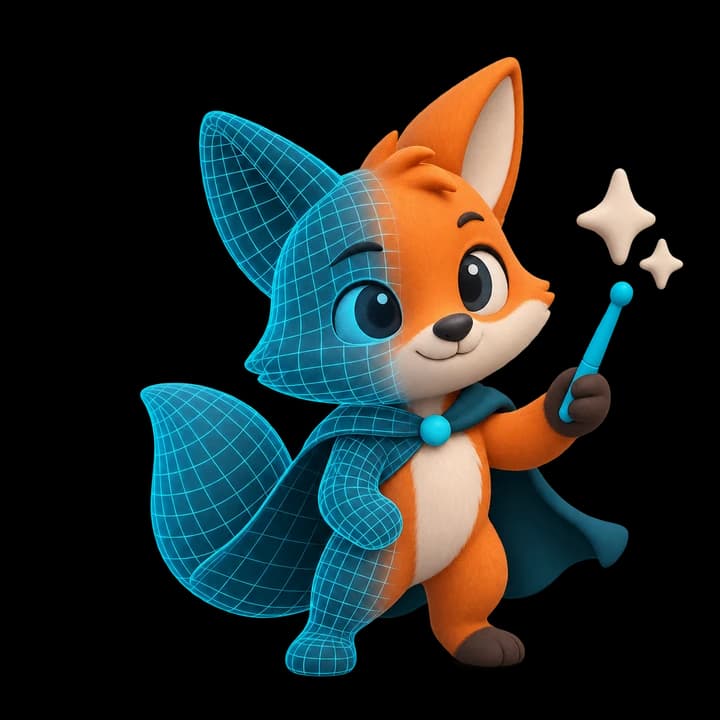
Start with a concrete subject: a fox ranger, a ceramic vase or a compact spacecraft. Add its important shape and parts before describing decorative details. One main subject makes the brief easier to follow.
Add the details that matter
- 1Subject: what is the object or character?
- 2Shape: what silhouette, proportions or key parts should it have?
- 3Materials: is it worn leather, brushed metal, painted wood or something else?
- 4Style: are you aiming for a stylised, realistic or hand-painted appearance?
A useful tip. Example: A small fox ranger in a dark teal cloak, wearing worn leather boots and a satchel. Rounded proportions, warm orange fur, stylised game-character appearance.
Keep revisions focused
If the brief feels crowded, remove details that compete with the main idea. Save a copy, then try changing one element at a time. Templates are a useful source of structure and vocabulary.
A prompt describes a creative goal; it does not guarantee exact geometry, licensing, technical suitability or a particular output.
Need a hand? Email [email protected]